
MILLTHORPE VILLAGE
HISTORY
Our History & Heritage
Millthorpe - heritage with style.
Locals joke that “Heritage” is Millthorpe’s middle name. It provides a magical backdrop for the town emanating a feeling of almost stepping back in time as you amble through the streets.
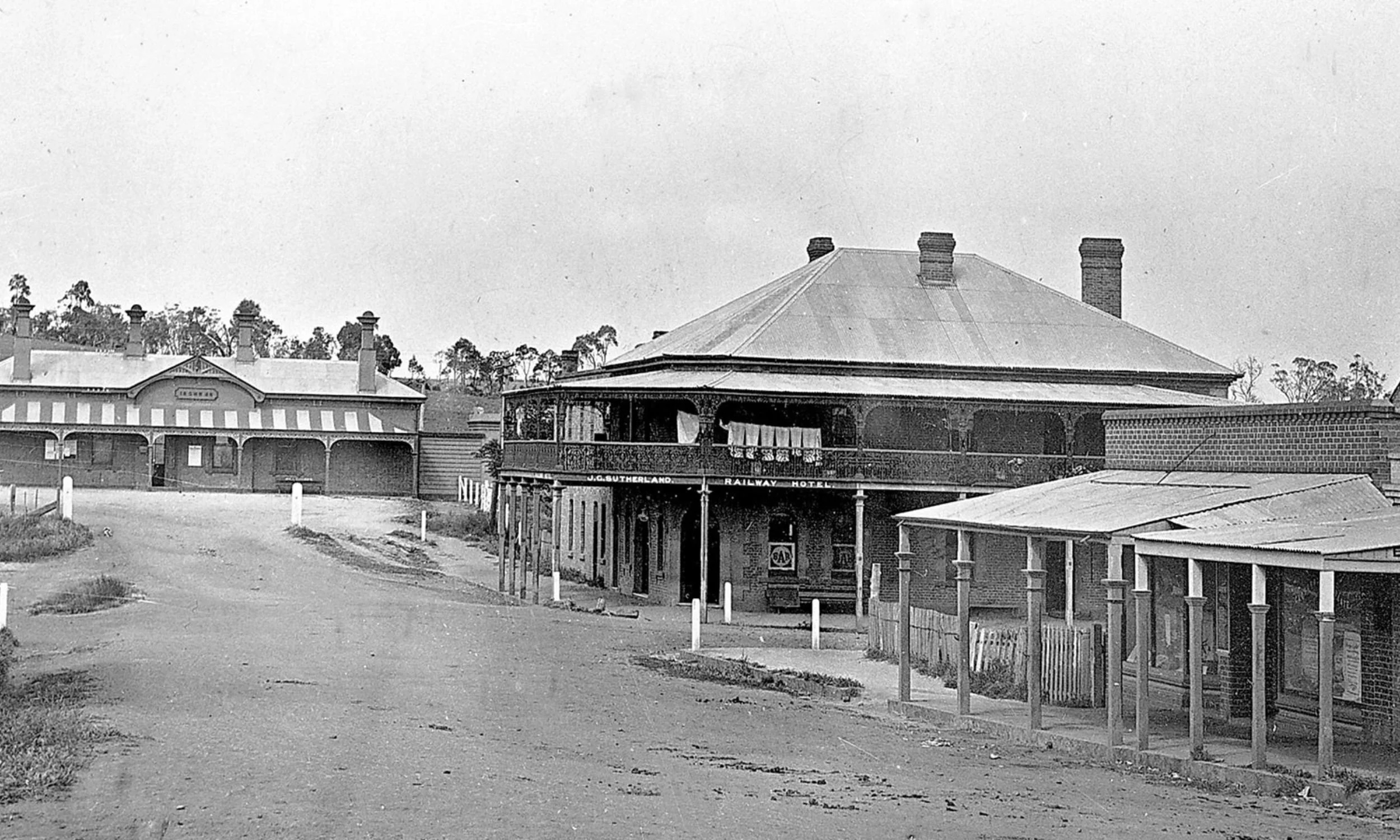
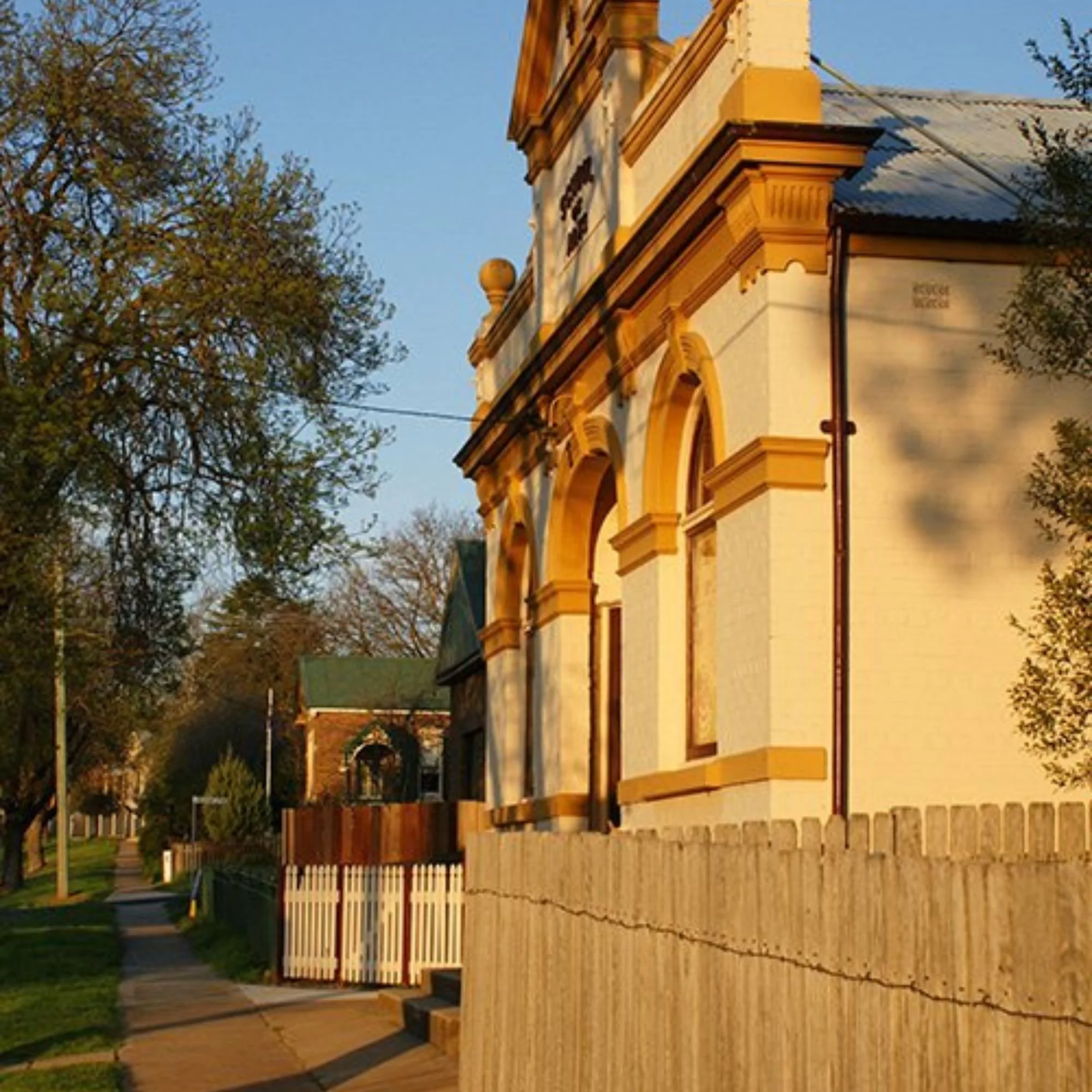
Millthorpe has a rich history, well-known for its grand public and commercial buildings and its heritage streetscapes that have remained mostly unchanged since the early 1900s. Today, Millthorpe village is a heritage conservation area.
Discover the stories behind the beautiful heritage buildings. Talk to the people with a wealth of knowledge and enthusiasm for our vibrant and historic village. It’s not at all hard to imagine living in the community a century ago… horses tethered to veranda posts, carts and bullock trains heading to the Railway Station to unload produce, children skipping past to school and locals chatting on street corners.
Don’t forget a visit to Millthorpe wouldn’t be complete without a visit to the Golden Memories Millthorpe Museum.
From Forest to Farm
The quiet country village of Millthorpe today disguises a bustling history of a community that built an independent, determined character over the years with vigour and tenacity.
The traditional landowners are the Wiradjuri people, with the first Europeans in the area being stockmen sent to the government Stock Station at Shadforth, near Fredericks Valley, in the early 1830’s. This included Charles Booth, an ex-convict who had charge of several of the stockmen. Booth went on to become a publican and then as a free man was granted 997 acres of land two miles to the west, of what is now Millthorpe, in 1835. Booth went on to build our first building on his farm, named Grove Farm, a substantial house of brick, which still stands today on private land.
The Forest, as the broader area was known, with its dense bush and prolific populations of possums, ducks, kangaroo and emu, is the place where the Bathurst / Flyers Creek track crossed the Blackman’s Swamp (Orange) / Kings Plains track and where the first name of The Crossroads originated.
There were only a few isolated settlers until two important events occurred – first, the discovery of payable gold at Ophir in 1851 by William Tom and John Lister (who is buried in Millthorpe) and then the Robertson’s Land Act of 1861.
These two events stimulated an explosion of interest in the area and the beginnings of a partnership of mutual convenience between agriculture, mining and the local community which persists today.
Village Foundations
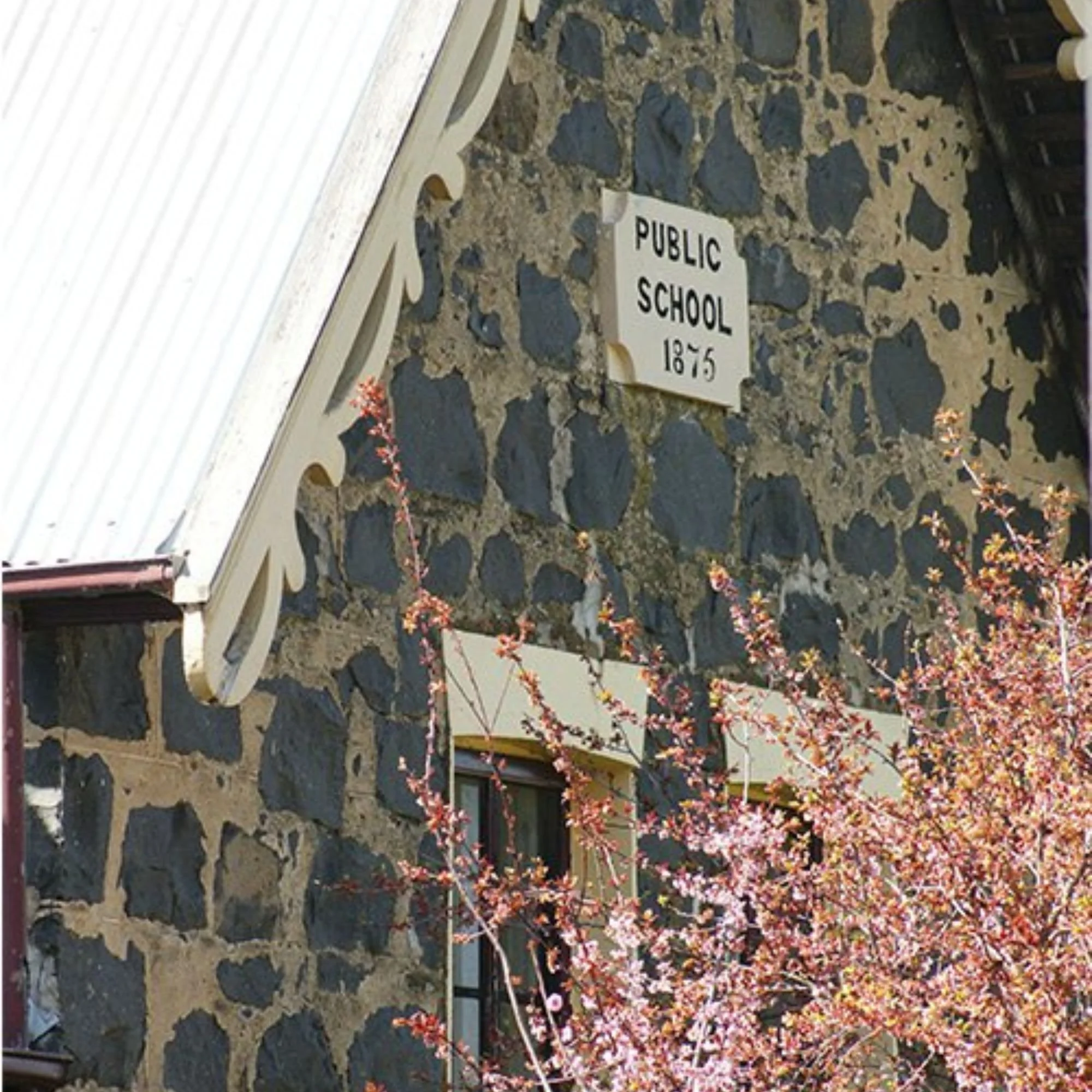
The earliest signs of village life appear to have been a slab and bark schoolhouse built by members of the Church of England around mid 1860’s. Application for the establishment of a public school was granted in 1867, at Spring Grove. This is the first reference to the first village name. Schoolmaster William Webb was appointed as teacher in 1869. Webb proved to be a pillar of the fledgling community and remained so for the thirty years of his tenure.
Other denominations followed with Methodists (1885), Baptists (1902), Roman Catholics (1904) and the Salvation Army (1893) all represented with their own buildings.
The first pub was built in the late 1870’s on the crossroads and was known as Montgomery’s Spring Grove Hotel. The adjacent blue stone stables still stand today and are possibly one of our oldest buildings along with the ‘new bluestone school’ across the road built in 1875. A further 3 pubs were built to service the thriving village and surrounds by 1904.
Golden Years: 1877–1900
The ultimate jewel in Millthorpe’s crown was the coming of the railway line in 1877, though not without spirited debate. After considerable back-and-forth over the proposed route, the decision to pass through Blayney and on to Orange marked a pivotal moment for the village. Yet the fight wasn’t over - Millthorpe’s representation for a station was initially declined in favour of nearby Spring Hill. Then, when approval was finally granted, the station’s proposed location - on the far side of the tracks and distant from the village - sparked fresh protest. Thankfully, common sense prevailed, and in 1886, the new station was constructed in the heart of the village, on the proper side of the line.
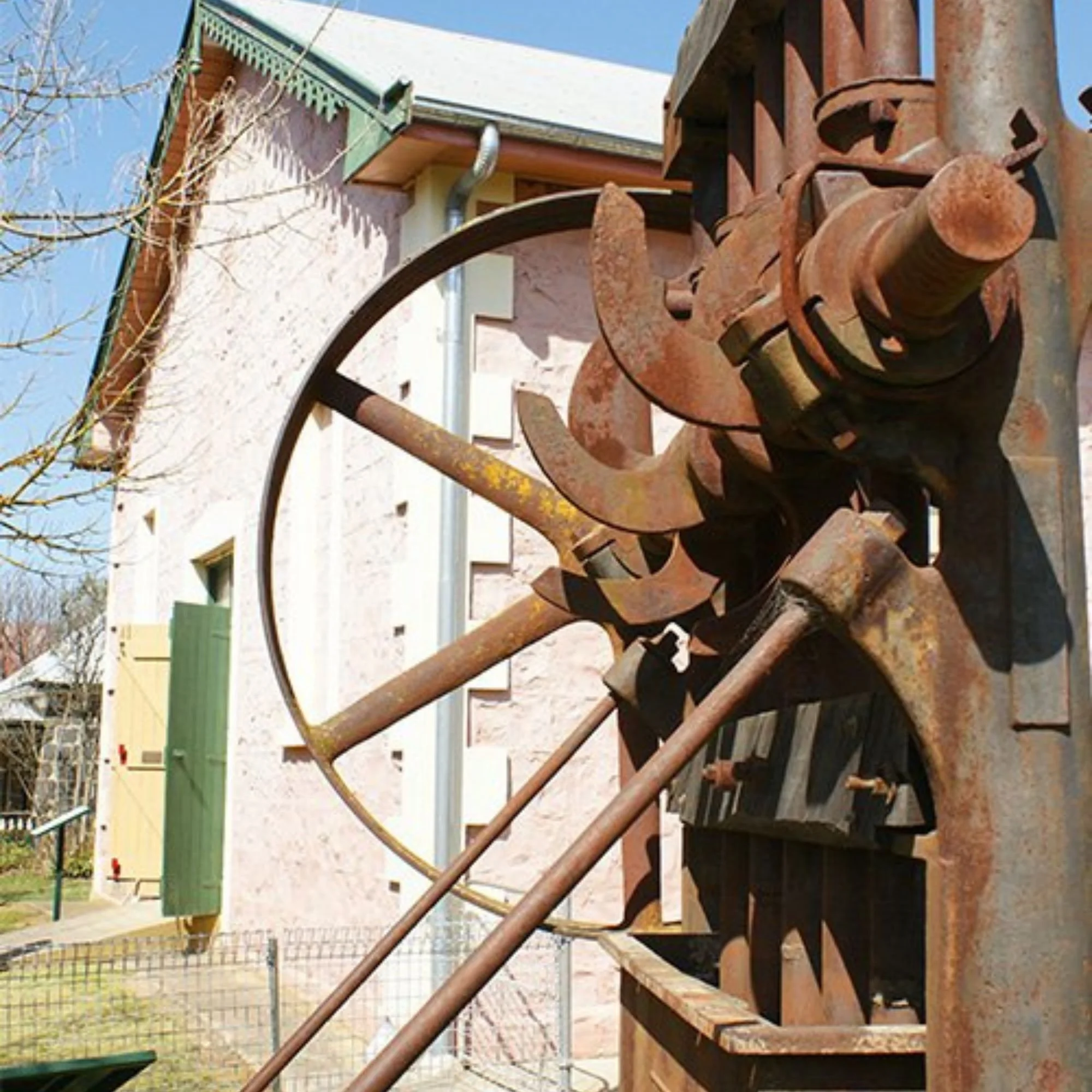
In parallel, the local Farmers Union emerged as a visionary force. In 1880, it hosted a groundbreaking demonstration of a new steam threshing machine, before pioneering agricultural shows and ploughing matches. The group also championed the establishment of a flour mill. Originally slated for Spring Hill, the site was shifted to Spring Grove (now Millthorpe) by a single vote, after some Spring Hill members missed the decisive meeting.
The Mill tender was accepted in 1884 and, despite early challenges, it operated - under various guises - until the 1960s. While the local grain proved less than ideal for flour milling, the facility grew into one of the largest in NSW, drawing grain from across the state and laying a foundation of prosperity for the growing village.
Golden Years: 1901–1960s
Around the new railway and flour mill, a private town quickly took shape. Local landowners began subdividing land into village allotments, and a community meeting was called to discuss a name change. Tired of the overused “Spring” monikers in the area, villagers voted - by a narrow margin of 38 to 31 - to adopt a name that reflected the importance of the Mill: Millthorpe.
The railway station and siding became the beating heart of Millthorpe’s success, connecting local agricultural producers with expanding markets in Sydney. The Mill depended on rail, as did farmers and merchants eager to supply the state’s growing urban appetite.
Millthorpe rose to become one of the largest rail centres in NSW, exporting flour, chaff, and later potatoes. It was during this golden age of agriculture and commerce that the village’s built character was truly forged. Elegant and functional buildings sprang up - many of which still line the streets today - serving commercial, agricultural, and civic needs.
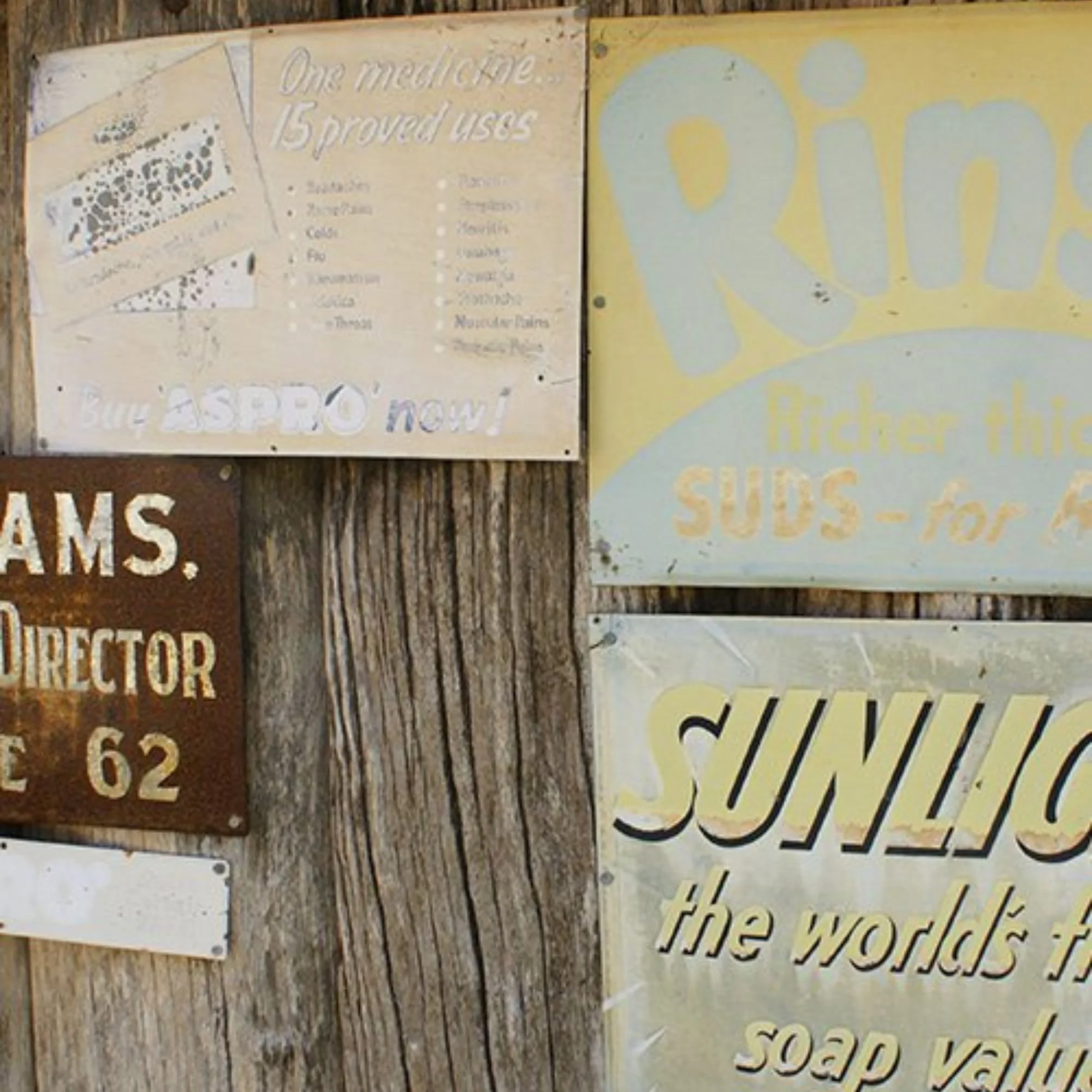
Commerce thrived with the establishment of a butter factory in 1894, a jam factory in 1922, and a freezing works that exported rabbits. The village also boasted one of the state’s busiest freight-handling centres, alongside essential services like banks, a post office, schools, churches, and telephone facilities - everything required for a thriving rural hub.